info@frimaparts.com
0574-83073957
Mon - Fri 08:00 - 17:00
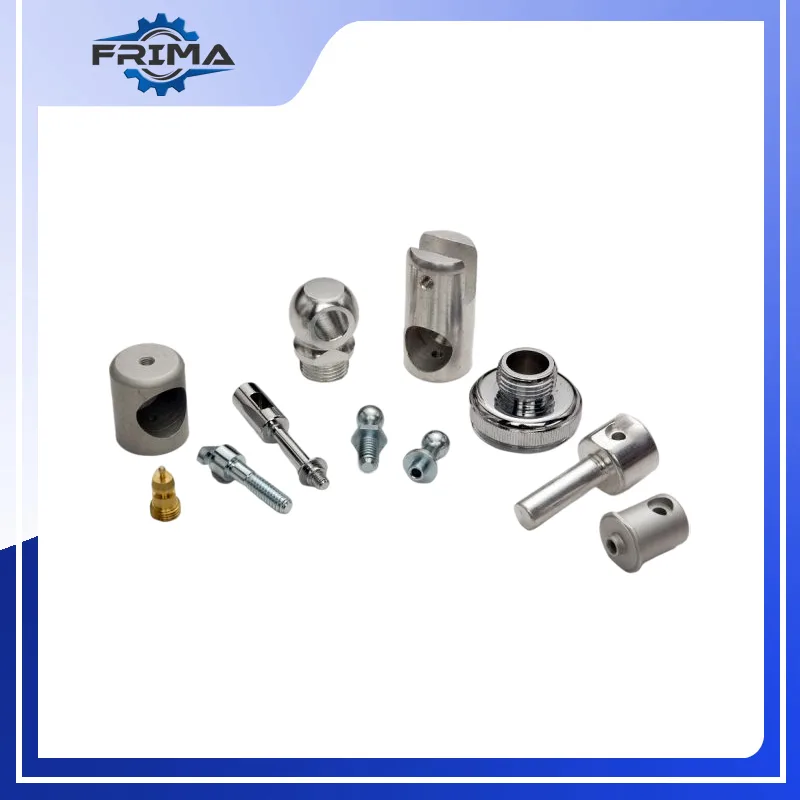
As a professional precision turned parts manufacturer and supplier in China, our factory has the latest technology and production equipment, which can provide customers all over the world very good service. We also offer professional surface treatment services for all machined parts, including grinding, deburring, heat treatment, electroplating, coating, painting, etc.
FRIMA redefines the advantages of “Made in China.” With our proprietary ISO Class 7 cleanroom-standard CNC facility, comprehensive raw material inventory system, and fully internalized production workflow, we spare you the quality fluctuations and communication inefficiencies often associated with multi-tiered outsourcing. From order confirmation to First Article Inspection, every single stage is executed entirely within our own facility. We serve clients across highly demanding sectors—including medical, aerospace, and automotive electronics—and they choose FRIMA precisely because, here, “Made in China” stands for transparency, control, and absolute trustworthiness.
2. Automated Feeding & In-line Monitoring: We utilize high-precision automated feeders; furthermore, select equipment is outfitted with in-line dimensional inspection systems to monitor critical dimensions in real time.
3. First-Piece Approval: Prior to mass production, the first piece is subjected to a full dimensional inspection, and a detailed report is generated for client approval.
4. In-Process Sampling: Operators perform initial checks and self-inspections, while dedicated roving inspectors conduct periodic spot checks to ensure the stability of process parameters.
5. 100% Final Inspection: Critical dimensions undergo 100% verification using instruments such as pneumatic gauges and optical sorting machines to prevent any defective parts from reaching the customer.
6. Our Inspection Resources: CMM (Coordinate Measuring Machine), Profile Projectors, Surface Roughness Testers, Contour Measuring Instruments, Hardness Testers, Pneumatic Gauges, Thread Gauges, and more.
Avoid Excessive Length-to-Diameter Ratios: When the ratio of length to diameter exceeds 4:1, machining operations become prone to vibration. If a longer structure is required, consider incorporating additional support features or utilizing a multi-stage machining process. This is a common optimization recommendation that FRIMA frequently offers to clients when producing precision turned parts.
Chamfer and Fillet Design: Incorporating a fillet of 0.2mm or larger at shaft shoulder transitions helps minimize stress concentration while simultaneously extending tool life.
Tolerance Rationalization: Apply high-precision tolerances (e.g., H7/g6) only to critical mating surfaces involved in assembly. For non-functional surfaces, utilize standard tolerances (e.g., ISO 2768-m) to significantly reduce the unit cost of each part.
Avoid Unduly Small Internal Threads: Machining internal threads smaller than M2 presents significant technical challenges and carries a high risk of tool breakage. If such small threads are absolutely necessary, ensure that adequate tool run-out grooves are provided in the design.
Prioritize Standard Bar Stock Sizes: Whenever possible, utilize commonly available bar stock diameters (e.g., φ6, φ8, φ10, φ12, φ16, φ20, etc.) to avoid the increased material costs and lead times associated with custom-sized stock.
Surface Treatment Selection: Select the appropriate surface treatment method based on the intended operating environment—Anodizing (for aluminum alloys), Zinc/Nickel Plating (for steel parts), Passivation (for stainless steel), or Electroless Nickel Plating (to enhance hardness and corrosion resistance).